The Complete Guide to Residential Outdoor Heating: How to Choose the Right Patio Heater for Your Home

A well-heated outdoor space transforms a patio, pergola, or poolside area from a seasonal feature into a year-round extension of your home. The right outdoor heater extends your evenings, improves the comfort of your outdoor kitchen, and adds a layer of intentional design that elevates the entire space.
This guide covers everything homeowners and interior designers need to know before selecting a residential outdoor heating system — from understanding infrared technology, to choosing between electric and gas, sizing for your space, and selecting the right Bromic Heating model for your home.
How Infrared Outdoor Heating Works
Traditional heaters warm the air around them — which means as soon as a breeze passes through, that warmth dissipates. Infrared radiant heating works differently. Rather than heating air, infrared heaters emit invisible wavelengths of light that warm people, furniture, and surfaces directly — the same mechanism as sunlight.
This makes infrared heating significantly more efficient outdoors. The warmth reaches you immediately, it doesn't get blown away by the wind, and it doesn't require a sealed space to be effective. For patios, pergolas, and outdoor kitchens, infrared is the technology of choice.
Infrared radiant heating is up to three times more efficient than convective heating in outdoor environments — warmth reaches guests immediately and isn't affected by air movement the way traditional heating is.

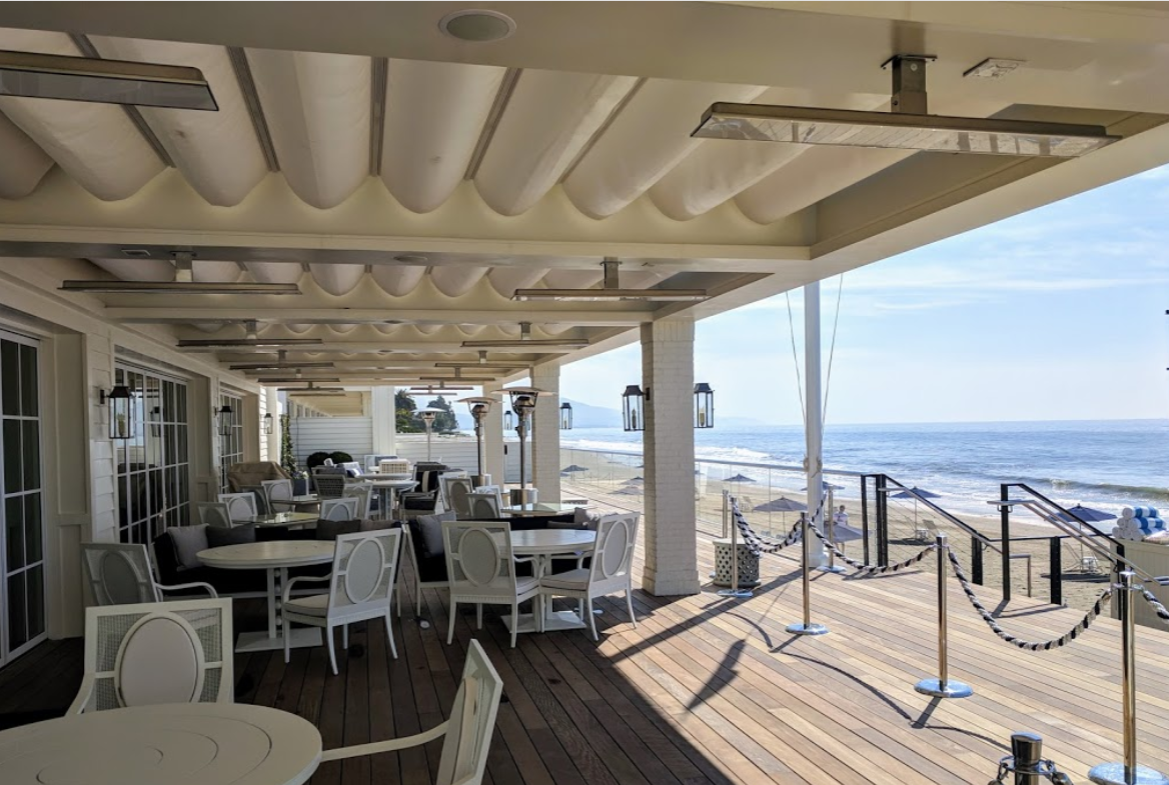
Bromic Platinum Smart-Heat™ Electric — discreet ceiling-mounted heating for covered residential patios.
Electric vs Gas: Which Is Right for Your Home?
The electric vs gas decision is the most important choice in any residential heating specification. Both deliver infrared radiant warmth, but they suit different spaces, architectural styles, and installation contexts.
Electric Infrared Heating
Electric patio heaters are the preferred choice for architecturally designed homes where clean lines, quiet operation, and discreet installation are priorities. They mount flush to the ceiling or wall, produce no combustion byproducts, and require no ventilation — making them ideal for covered patios, pergolas, and outdoor kitchens where the heater needs to disappear into the architecture.
Bromic Heating's residential electric range includes the Eclipse Smart-Heat® Pendant, Platinum Smart-Heat™ Electric, and Tungsten Smart-Heat® Electric — each offering different aesthetics and output levels for different home styles and space sizes.
Best for: Covered patios, pergolas, outdoor kitchens, alfresco dining areas, and any space where design integration matters.
Gas Infrared Heating
Gas patio heaters excel in larger outdoor spaces, open-air environments, and situations where maximum heat output is the priority. They produce more BTUs per unit than comparable electric models, making them effective across larger coverage areas and in conditions with more wind exposure.
Bromic Heating's residential gas range — Platinum Smart-Heat® Gas and Tungsten Smart-Heat® Gas — is available in natural gas and propane configurations, giving homeowners flexibility based on their existing infrastructure.
Best for: Open patios, pool areas, large backyards, and outdoor entertaining spaces where higher heat output and broader coverage are needed.
- Silent operation
- Zero emissions
- Architectural integration
- Minimal maintenance
- Smart control compatible
- Best for covered spaces
- Higher heat output
- Greater coverage area
- Wind resistant
- Natural gas or propane
- Freestanding options
- Best for open spaces

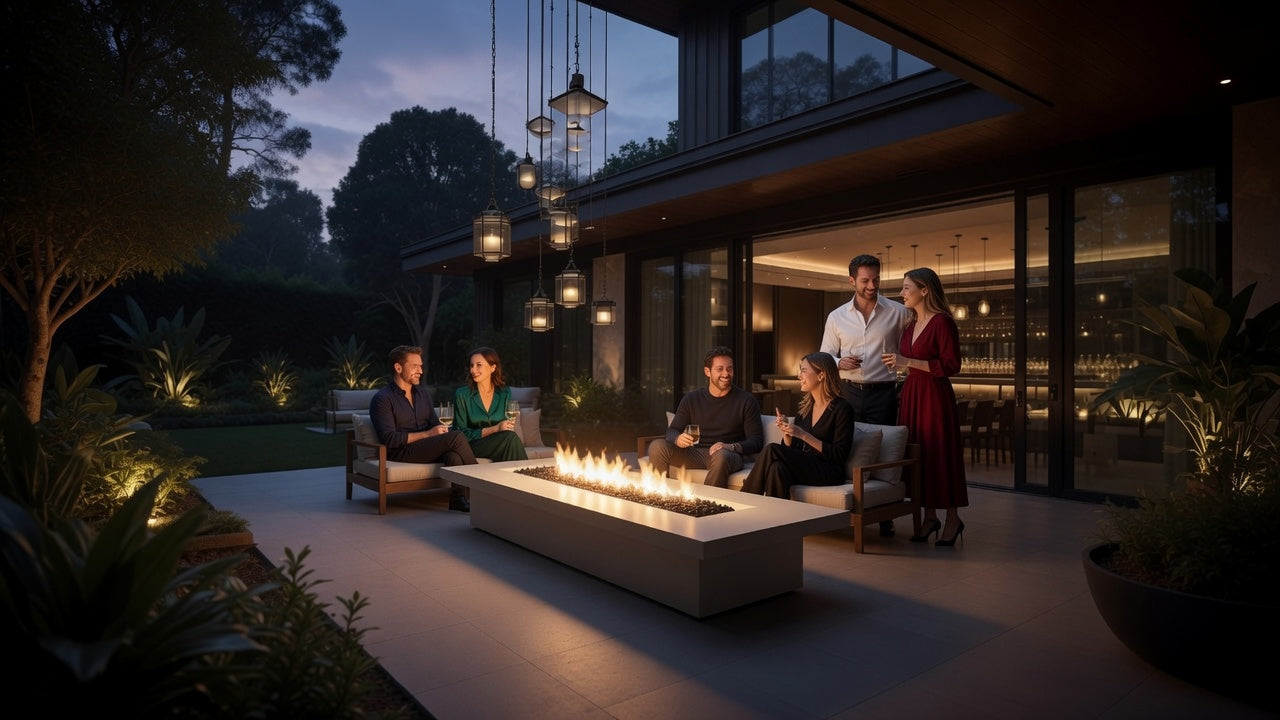
Bromic Platinum Smart-Heat® Gas — ideal for open patios and larger outdoor living spaces.
Choosing a Heater by Space Type
Covered Patios & Pergolas
Covered outdoor spaces are the ideal application for electric infrared heating. The ceiling or roof structure provides a natural mounting point for built-in units, and the partial enclosure means heat stays in the zone rather than dissipating into open air. Bromic's Platinum Smart-Heat™ Electric and Eclipse Smart-Heat® Pendant are both excellent choices here — the Platinum for its discreet, architectural profile, and the Eclipse for spaces where the heater itself is meant to be a design feature.
Key consideration: ceiling height matters significantly in covered patio applications. A 2300W unit works well at 8–9 feet; a 3400W or 4500W unit is recommended for higher ceilings of 10–12 feet.
Outdoor Kitchens
Outdoor kitchens present a unique set of requirements — the heating needs to be positioned carefully to avoid interference with cooking appliances and ventilation, and the aesthetic needs to work alongside cabinetry, benchtops, and appliances. Ceiling-mounted electric infrared is generally the cleanest solution, positioned to cover the dining or seating zone adjacent to the kitchen rather than directly above cooking surfaces.
Pool Areas & Open Backyards
Open pool areas and large backyard entertaining spaces are where gas heating excels. The higher BTU output covers larger areas effectively, and gas units perform well in the more exposed conditions typical of open outdoor spaces. The Tungsten Smart-Heat® Gas or Platinum Smart-Heat® Gas, mounted to a pergola structure or wall adjacent to the pool area, can extend evening poolside entertaining well into the cooler months.
Alfresco Dining Areas
For dedicated alfresco dining spaces — covered or partially covered — the priority is comfort at table level without visual intrusion. Ceiling-mounted electric heating positioned directly above the dining table delivers focused, directional warmth exactly where guests are seated. The Eclipse pendant is particularly well suited here, providing both warmth and ambient lighting in a single fixture.

Bromic Eclipse Smart-Heat® — radiant heating and dimmable LED lighting in a single architectural pendant.
How to Size a Residential Outdoor Heating System
Getting the sizing right ensures your outdoor space is genuinely comfortable, not just technically heated. The key variables for residential sizing are:
Space Dimensions
Measure the area you want to heat, not the total patio size. Focus on the zones where people sit and gather rather than treating the entire outdoor area as one heating zone.
Ceiling Height
Higher ceilings require higher wattage. A 2300W unit at 8 feet delivers effective warmth; the same space at 11 feet may require a 3400W or 4500W unit for equivalent comfort.
Wind Exposure
Covered or semi-enclosed spaces retain heat more effectively. Open, exposed areas may require gas heating with wind-resistance technology, or higher-output electric units.
Climate
Colder climates or spaces used through winter require higher output units than mild climates where heating is primarily for shoulder-season comfort.
As a general guide: a single 2300W electric unit covers approximately 65 square feet of effective heat zone; a 4500W unit covers up to 129 square feet. For gas, a single unit covers up to 215 square feet under optimal conditions. For most residential patios, one to three units is typical depending on layout.
Design & Integration Considerations
The best outdoor heaters are the ones you barely notice — until you feel the warmth. Bromic Heating's residential range is designed with architectural integration as a primary objective, not an afterthought. That said, thoughtful placement and specification make the difference between a heating system that enhances a space and one that clutters it.
Colour & Finish
Bromic Heating's electric range is available in black and white finishes, allowing the heater to recede into or complement your ceiling colour. For lighter pergola structures and ceilings, white finishes integrate cleanly. For darker architectural spaces, black creates a more intentional, industrial aesthetic.
Mounting Position
Ceiling mounting delivers the most even, natural heat distribution — warmth radiates downward the way sunlight would. Wall mounting is appropriate where ceiling mounting isn't structurally feasible, but the angle of the heat zone needs to be carefully considered to ensure coverage reaches seated guests rather than passing overhead.
Working With Your Architect or Designer
For new builds and major renovations, outdoor heating should be specified early in the design process — not added as a retrofit. Specifying Bromic Heating at the design stage allows electrical conduit, gas lines, and mounting points to be planned into the structure, resulting in a significantly cleaner installation with no visible wiring or surface-mounted conduit.
Smart Controls for Residential Outdoor Heating
Bromic's Smart-Heat™ range integrates with the Affinity Controls Collection, enabling app-based control, scheduling, and multi-zone management for your entire outdoor heating system.
For a typical residential installation, this means being able to turn on the patio heating from inside the house before stepping out, dim the heat output as the evening warms up, or set a schedule so the space is warm when you arrive home. For homes with multiple outdoor zones — a covered dining area, a pool terrace, and a lounge area, for example — each zone can be controlled independently at the right output level.
Bromic Heating's system also integrates with popular home automation platforms, allowing outdoor heating to be included in smart home routines alongside lighting, audio, and climate control.

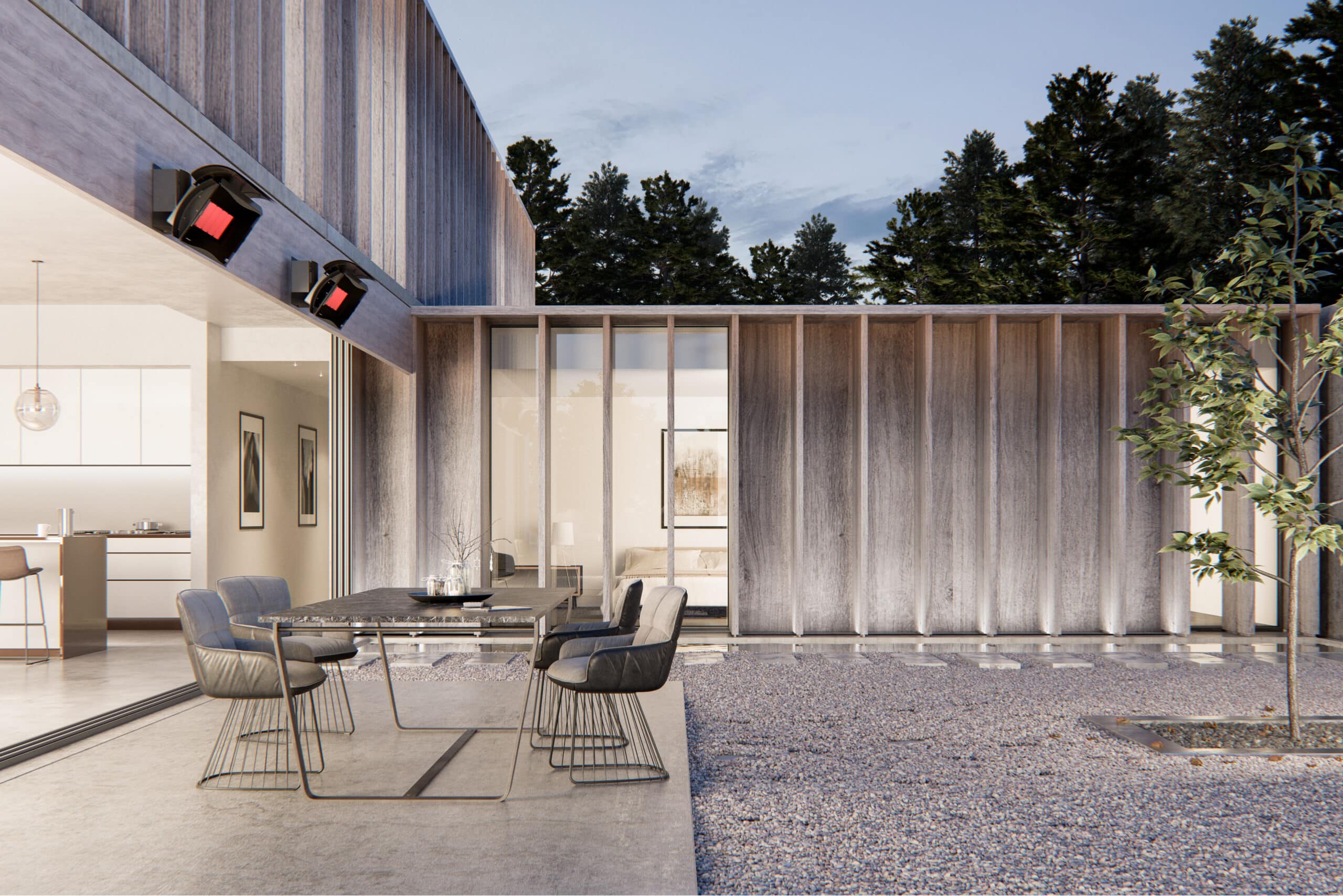
Bromic Tungsten Smart-Heat® Electric — wall-mounted configuration for residential outdoor spaces.
Recommended Residential Products
AlphaCaveHQ stocks and supports the complete Bromic Heating residential range. The four products most commonly specified for residential installations are:

Eclipse Smart-Heat® Pendant
Radiant heating and dimmable LED lighting in a single architectural pendant. The centrepiece of any premium outdoor space.
View Product →
Platinum Smart-Heat™ Electric
Discreet, low-profile ceiling-mounted heating for covered patios, pergolas, and architectural outdoor spaces.
View Product →
Platinum Smart-Heat® Gas
Signature ceramic-glass fascia delivering refined design and efficient heat distribution for open patios and pool areas.
View Product →
Tungsten Smart-Heat® Electric
Versatile electric infrared heating with wall and ceiling mount configurations for a range of residential outdoor spaces.
View Product →Frequently Asked Questions
What is the best outdoor heater for a covered patio?
Electric infrared heaters are generally the best choice for covered patios. Bromic's Platinum Smart-Heat™ Electric and Eclipse Smart-Heat® Pendant both mount discreetly to the ceiling, operate silently, and deliver focused directional warmth without any combustion or ventilation requirements. For higher ceilings above 10 feet, a higher-output model such as the 4500W Platinum or Tungsten Smart-Heat® Electric is recommended.
How much does it cost to install an outdoor heater at home?
Installation costs vary depending on your location, the type of heater, and your existing infrastructure. Electric heaters typically require a licensed electrician to run a dedicated circuit, while gas heaters require a licensed gas fitter. As a general guide, straightforward residential installations run between $200–$600 per unit. We recommend booking a consultation so we can help you plan and budget accurately.
Can outdoor heaters be left outside in the rain?
Bromic Heating heaters are designed and IP-rated for permanent outdoor installation and can withstand rain and humidity. However, we recommend covered or semi-covered mounting locations for ceiling and wall-mounted models to maximise longevity and performance. Always refer to the specific IP rating of your chosen model for guidance on exposure suitability.
How do I control my outdoor heater?
Bromic's Smart-Heat™ range is compatible with the Affinity Controls Collection, enabling app-based control, dimming, scheduling, and multi-zone management. A wall-mounted controller is also available for convenient in-home operation. Both electric and gas models are compatible with Bromic Heating's controls ecosystem.
Should I choose electric or gas for my patio?
If your patio is covered and ceiling height allows for mounting, electric infrared is generally the better choice — it's quieter, cleaner, and integrates more discreetly into the architecture. If your space is open-air, larger than 200 square feet, or exposed to wind, gas heating's higher BTU output and wind resistance make it the more effective specification. Our team can help you decide based on your specific space during a free consultation.
Do I need a professional to install my outdoor heater?
Yes. Electric heaters require a licensed electrician to install the dedicated circuit and mounting hardware. Gas heaters require a licensed gas fitter. Proper installation ensures the unit operates safely, performs at its rated capacity, and maintains its warranty. AlphaCaveHQ can connect you with qualified installers in your area.
Talk To Our Residential Heating Specialists
AlphaCaveHQ works with homeowners and interior designers to specify, supply, and support the right Bromic Heating solution for every residential outdoor space. Our consultation is free — tell us about your space and we'll recommend the right system.